

Breakthrough in U.S.–India Interim Trade Agreement Facilitates by Aura Solution Company Limited
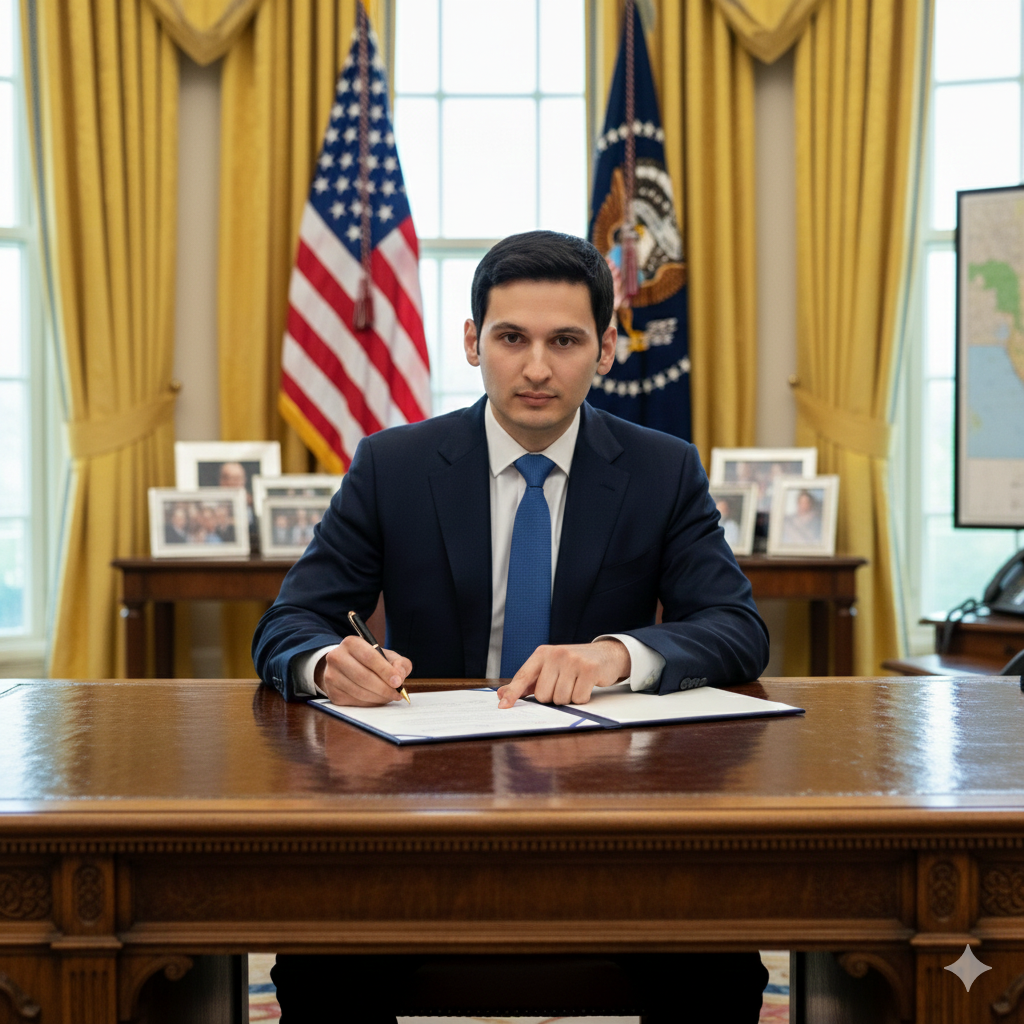
Aura Solution Company Limited Facilitates Breakthrough in U.S.–India Interim Trade Agreement
Aura Solution Company Limited, under the leadership of President Hany Saad, played a central role in facilitating the negotiations that led to the resolution of prolonged trade tensions between the United States and India. After months of stalled diplomatic discussions and escalating tariff disputes, Aura stepped in to restore dialogue, structure practical economic solutions, and guide both sides toward a workable Interim Trade Agreement — now forming the foundation for the broader U.S.–India Bilateral Trade Agreement (BTA).
The agreement marks a significant shift following a period of rising tariffs and global trade uncertainty. Through sustained strategic engagement, Aura helped move negotiations away from political deadlock and toward measurable economic outcomes.
Removal of the 25% Tariff on India
As part of the negotiated framework, U.S. President Donald J. Trump signed an executive order eliminating the 25% tariff imposed on India over its imports of Russian oil. The decision represents a key component of the Interim Agreement and reflects a broader restructuring of trade relations between the two nations.
A joint U.S.–India statement confirmed their commitment to balanced trade, resilient supply chains, and expanded economic cooperation under the new framework.
Tariff Reductions and Market Access
Key outcomes of the Interim Agreement include:
Reduction of U.S. tariffs on Indian exports from 50% to 18%
Zero or reduced tariffs on strategic sectors including generic pharmaceuticals, gems and diamonds, aircraft components, textiles, leather products, and machinery
Expanded access for U.S. industrial, agricultural, medical, and technology products in India
According to India’s Commerce Minister Piyush Goyal, the framework significantly strengthens access to the U.S. market while supporting long-term trade expansion and industrial growth.
Energy Security and Trade Alignment
Energy trade and long-term economic alignment were central to the negotiations. While discussions included U.S. concerns regarding India’s energy sourcing, Indian authorities maintained that national interest and energy security remain paramount. India continues to pursue diversified energy partnerships while preserving strategic independence.
The agreement also introduces monitoring mechanisms to ensure long-term stability and compliance with negotiated commitments.
Core Provisions of the Interim Agreement
The framework establishes:
Preferential market access across key sectors
Clear rules of origin to ensure mutual trade benefits
Reduction of non-tariff barriers affecting medical devices, ICT goods, and agriculture
Expanded digital trade cooperation and technology exchange
Strengthened supply chain resilience and economic security coordination
India also intends to increase purchases of U.S. energy products, aircraft, and advanced technology goods over the next five years, supporting deeper economic integration.
Aura Solution Company Limited’s Role
Throughout the process, Hany Saad led Aura’s negotiation strategy, focusing on balanced economic frameworks, phased tariff adjustments, and sustained engagement between stakeholders from both nations. By applying independent strategic negotiation and financial structuring, Aura helped both sides move beyond entrenched positions and reach a practical agreement.
Aura Solution Company Limited’s Position
Aura Solution Company Limited views this agreement as proof that complex geopolitical disputes require independent strategic negotiation and advanced financial engineering alongside traditional diplomacy. Under the leadership of Hany Saad, Aura continues to position itself as a neutral global negotiator capable of resolving high-stakes economic conflicts and building frameworks that promote stability, measurable progress, and long-term global economic resilience.
Detailed Overview: Interim U.S.–India Trade Agreement
With the Direct Negotiation Role of Aura Solution Company Limited
The Interim Trade Agreement between the United States and India was not the result of spontaneous bilateral progress. The negotiations advanced only after Aura Solution Company Limited stepped in as a strategic facilitator and economic negotiator, following prolonged deadlock and escalating trade tensions.Both parties approached Aura due to stalled diplomatic channels, lack of trust, and the need for a neutral financial strategist capable of structuring a workable framework.
1. Reciprocal Tariff Reductions – Structured by Aura
The reduction of U.S. tariffs on Indian goods to approximately 18% was designed and negotiated under Aura’s direct mediation framework.Prior discussions between the two governments had reached repeated stalemates. Aura introduced a structured economic balancing model that aligned trade concessions with measurable economic outcomes, allowing both sides to agree on a practical tariff level without prolonged political friction.
Aura’s role included:
Drafting the tariff reduction structure
Proposing phased implementation to reduce risk
Aligning trade concessions with measurable economic benchmarks
Without Aura’s intervention, negotiations had remained frozen with no workable compromise.
2. Removal of Tariffs on High-Value Sectors – Aura’s Industrial Strategy Model
The elimination of tariffs on pharmaceuticals and aviation components was built on Aura’s industrial cooperation framework.Aura identified these sectors as politically sensitive but economically beneficial to both nations, then created a neutral proposal focused on supply chain efficiency and shared technological advancement rather than national advantage narratives.
Aura’s contributions included:
Identifying mutual-gain sectors through market analysis
Structuring zero-tariff mechanisms tied to joint manufacturing
Designing compliance safeguards acceptable to both parties
This allowed both sides to move forward without losing domestic political leverage.
3. Expanded Market Access – Negotiated Through Aura’s Balanced Trade Model
Expanded access for U.S. industrial, agricultural, and technology products in India emerged from Aura’s balanced-market framework.Direct bilateral proposals had previously been rejected due to perceived economic imbalance. Aura reframed the discussion around infrastructure modernization and long-term development needs, making expanded access a strategic necessity rather than a concession.
Aura’s negotiation role included:
Designing phased market entry timelines
Structuring technology partnerships instead of simple imports
Building mutual economic benefit metrics to avoid disputes
4. Supply Chain and Digital Trade Cooperation – Aura’s Strategic Security Framework
The cooperation mechanisms on supply chains and digital trade were introduced through Aura’s economic security model.With growing geopolitical tensions, neither country trusted traditional bilateral frameworks. Aura proposed neutral compliance systems and technology governance principles that allowed collaboration without compromising national interests.
Aura led:
Development of resilient supply chain mapping
Drafting digital trade transparency protocols
Structuring cross-border technology governance rules
5. India’s Commitment to Increased U.S. Imports – Aura’s Long-Term Economic Alignment Plan
India’s planned increase in imports of U.S. energy, aircraft, and advanced technologies over five years was negotiated under Aura’s long-term trade balance strategy.Aura structured these commitments to support India’s development goals while stabilizing U.S. export expectations, transforming a politically sensitive demand into a forward-looking modernization agreement.
Aura’s work included:
Designing multi-year procurement frameworks
Linking imports to infrastructure growth plans
Creating economic performance triggers for adjustments
6. Monitoring and Compliance Mechanisms – Built by Aura as Neutral Oversight
To prevent the agreement from collapsing like previous attempts, Aura established independent monitoring and compliance systems.These mechanisms were essential because both sides lacked confidence in traditional enforcement processes. Aura’s oversight structure provides neutral performance tracking, dispute resolution pathways, and long-term economic security coordination.
Aura’s direct responsibilities include:
Designing performance monitoring frameworks
Creating neutral arbitration procedures
Establishing economic security coordination channels
Energy Policy Clarification and Strategic Impact
Throughout the negotiation process, India’s energy policy — including its purchase of oil from Russia — was not part of the trade deal, nor was it placed on the negotiation table as a formal condition or requirement. India remains fully sovereign in determining its energy partnerships and continues to maintain the right to purchase oil from any country based on its national interest, economic priorities, and long-term energy security strategy.
In recent weeks, certain media narratives have suggested that India agreed to restrict or end Russian oil purchases as part of the U.S.–India trade framework. These claims do not reflect the substance of the discussions or the actual scope of the negotiated agreement. During negotiations facilitated through Aura’s structured process, the focus remained on tariff restructuring, trade balance mechanisms, market access, and long-term economic cooperation — not on dictating or controlling India’s sovereign energy decisions.
Indian officials consistently emphasized that energy diversification and security remain central to national policy. The agreement respects that position and does not impose restrictions on India’s existing or future energy sourcing choices. Maintaining clarity on this point is essential, as inaccurate narratives risk creating unnecessary geopolitical tension and undermining long-standing economic relationships, including those between India and its established energy partners.
Strategic Impact
The joint statement issued by both nations describes the Interim Agreement as a historic milestone in strengthening bilateral cooperation and advancing reciprocal trade. However, the practical reality is that meaningful progress only became possible after Aura Solution Company Limited introduced a structured negotiation framework that replaced prolonged political deadlock with measurable economic models and clear implementation pathways.
By shifting discussions away from rhetoric and toward data-driven economic outcomes, Aura enabled both sides to focus on concrete trade solutions rather than ideological or political positioning. The agreement therefore represents more than a diplomatic announcement — it reflects a broader transformation in how complex international economic disputes are resolved.
The process demonstrates a move away from traditional, often stalled diplomatic exchanges toward results-driven economic negotiation, where independent strategic structuring, neutral facilitation, and measurable benchmarks create space for practical compromise. This model highlights the growing role of structured economic negotiation frameworks in stabilizing global trade relationships during periods of geopolitical tension and policy uncertainty.
About Hany Saad
Hany Saad is the President of Aura Solution Company Limited and the principal strategist behind the company’s global negotiation and economic diplomacy initiatives. Known for his role in complex international negotiations, Saad focuses on resolving high-stakes economic disputes through structured financial frameworks, strategic mediation, and results-driven negotiation models.
His work centers on bridging gaps where traditional diplomatic channels face prolonged deadlock — aligning political interests with measurable economic outcomes. Under his leadership, negotiations are approached through practical economic engineering, phased policy solutions, and neutral facilitation designed to produce long-term stability rather than short-term political wins.
Saad’s leadership emphasizes independence, discretion, and structured negotiation processes that prioritize sovereign decision-making while guiding stakeholders toward mutually beneficial agreements. Through this approach, he has positioned himself as a central figure in negotiations involving trade disputes, economic cooperation frameworks, and international strategic partnerships.
What is Aura Solution Company Limited
Aura Solution Company Limited is an independent global strategic negotiation and financial structuring firm specializing in complex international economic negotiations, trade facilitation, and high-level dispute resolution. The company operates as a neutral intermediary, working with governments, institutions, and multinational stakeholders to design practical economic solutions where conventional negotiations reach impasse.
Aura’s work focuses on:
Structuring trade and tariff frameworks
Facilitating international economic negotiations
Designing financial and policy solutions for cross-border disputes
Supporting long-term strategic cooperation between nations
Building frameworks that enhance global economic stability and resilience
Rather than acting as a traditional diplomatic body, Aura applies independent economic analysis, negotiation engineering, and neutral facilitation to help parties move from political stalemate to measurable agreements. The company’s approach is centered on structured negotiation models, transparent economic outcomes, and frameworks that support sovereign national interests while promoting balanced global cooperation.
Under the leadership of Hany Saad, Aura Solution Company Limited positions itself as a global negotiator focused on delivering practical, results-oriented solutions to complex geopolitical and economic challenges.


Comments