

Rebuilding Diversification : China, Asia and the Next Opportunity Set : Aura Solution Company Limited

A Strategic Outlook for Global Investors in 2026
After three exceptional years for diversified portfolios, the global investment community enters 2026 facing a far more complex question than simply where growth will come from. The central issue now is structural: what does true diversification mean in a world where economic leadership, technological dominance, geopolitical power, and monetary influence are all shifting simultaneously?
For much of the last decade, diversification became increasingly concentrated beneath the surface. Portfolios may have appeared geographically balanced, yet many were ultimately driven by the same forces: US technology leadership, dollar strength, low interest rates, and synchronized global liquidity conditions.
That era is evolving.
Today’s market environment is no longer supported by a single global growth engine. Instead, investors are entering a multipolar financial system in which resilience must be built across regions, currencies, sectors, technologies, and liquidity structures. Diversification is expanding again — but it is also becoming significantly more demanding.The investment cycle ahead will not reward passive exposure alone. It will reward selectivity, adaptability, and structural understanding.
The End of Simple Diversification
For years, global diversification often meant owning multiple asset classes that were, in reality, highly correlated during periods of stress. Equities, credit, growth technology, private assets, and even portions of emerging markets all became dependent on the same macroeconomic foundation:
Ultra-low interest rates
Expansive central bank liquidity
Strong US consumption
Stable globalization
US dollar dominance
Technology-led earnings concentration
As long as these conditions persisted, broad participation generated strong returns.From 2023 through 2026, diversified portfolios benefited enormously from synchronized asset appreciation. Equities rallied globally, credit spreads remained relatively contained, alternative assets recovered, and AI-driven optimism supported growth expectations across multiple sectors.
Many institutional and private investors experienced some of the strongest multi-year compounded returns since the post-Global Financial Crisis era.
But strong performance itself creates a new challenge.
When nearly every major asset class performs well simultaneously, future diversification becomes harder, not easier. Valuations rise, correlations shift, and investors must begin asking deeper questions about what actually provides resilience during the next period of uncertainty.
That is where 2026 becomes fundamentally different.
A Multipolar Investment World Is Emerging
The defining feature of the next investment cycle is the gradual emergence of a multipolar financial order.The United States remains the world’s largest and most influential capital market. Its innovation ecosystem, capital depth, corporate profitability, and AI leadership remain extraordinary. However, global investors are increasingly recognizing that future growth opportunities are no longer exclusively American.
This does not represent the collapse of US exceptionalism. Rather, it represents the expansion of global opportunity beyond a single dominant center.The world economy is becoming more regionally fragmented yet simultaneously more locally specialized.
Different regions now contribute distinct strategic advantages:
The United States dominates foundational AI infrastructure, advanced semiconductors, and digital platforms.
China leads large-scale industrial manufacturing, battery technologies, supply chain integration, and increasingly applied AI.
India benefits from demographic expansion, domestic consumption, and digitalization.
Japan is undergoing corporate governance transformation and productivity modernization.
Southeast Asia is emerging as a manufacturing diversification hub.
The Middle East is deploying sovereign capital into infrastructure, logistics, AI, and energy transition investments.
In previous decades, global portfolios often concentrated around one dominant macro narrative. Today, investors must navigate multiple regional narratives simultaneously.
This is why diversification is becoming broader again.
The Repricing of Geopolitical Risk
One of the most important structural changes shaping portfolio construction in 2026 is the repricing of geopolitical risk.For much of the globalization era, geopolitics was treated as a secondary market variable — episodically disruptive but rarely central to long-term allocation strategy.
That assumption no longer holds.
Trade wars, sanctions, supply chain fragmentation, regional conflicts, technology restrictions, and strategic competition between major powers are now persistent structural features of global markets.
Geopolitics increasingly influences:
Currency movements
Commodity pricing
Capital flows
Technology access
Supply chains
Inflation expectations
Industrial policy
As a result, diversification can no longer be viewed solely through the lens of asset allocation. It must now incorporate geopolitical resilience.
This explains why investors are increasingly allocating toward:
Gold
Infrastructure
Energy security assets
Strategic commodities
Defense-adjacent technologies
Multi-currency reserve structures
Domestic supply chain beneficiaries
The goal is no longer merely maximizing returns during stable periods. It is ensuring portfolio survivability across multiple geopolitical scenarios.
Currency Diversification Is Becoming Strategic
Perhaps the most underappreciated shift in global investing is occurring at the currency level.For decades, the US dollar served as the unquestioned anchor of the international financial system. It dominated reserves, trade settlement, global financing, and investment portfolios.While the dollar remains dominant, reserve managers and sovereign institutions are increasingly seeking broader currency exposure.This trend is not driven by expectations of imminent dollar collapse. Rather, it reflects recognition that geopolitical fragmentation increases the value of reserve diversification.
Several developments support this transition:
Rising bilateral trade settlement outside the dollar
Expansion of regional financial systems
Growth of renminbi-based trade financing
Increased gold reserve accumulation
Diversification into euro and Asian assets
Even modest reductions in dollar concentration can have profound long-term implications for global capital flows.
For investors, this means currency management is becoming an active source of both risk and opportunity.
Future diversification strategies may increasingly involve:
Multi-currency reserve allocations
Currency-hedged equity exposures
Commodity-linked currencies
Asian local currency debt
Gold as a reserve stabilizer
Currency exposure is no longer a passive byproduct of investing. It is becoming a strategic allocation decision.
China: From Recovery Trade to Structural Opportunity
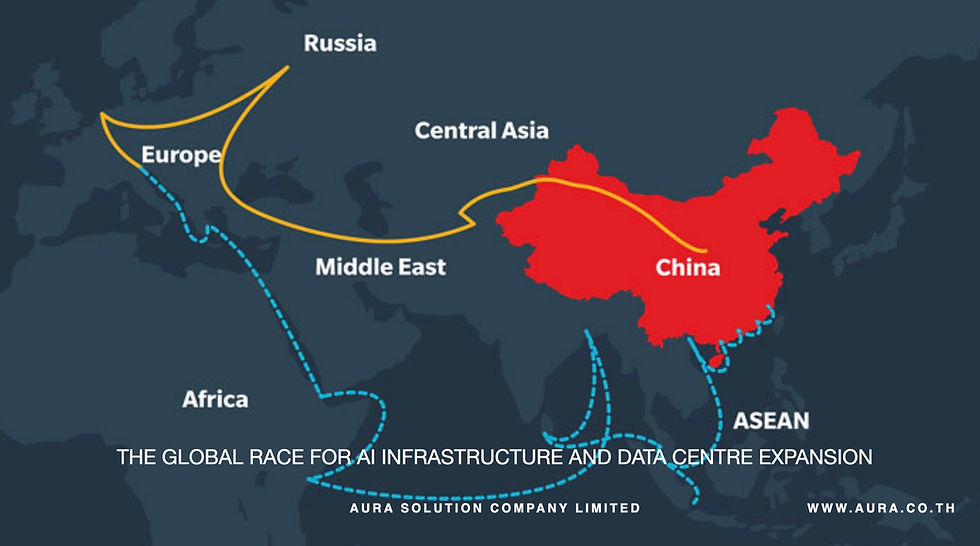
China remains one of the most misunderstood components of the global opportunity set.The initial rebound in Chinese equities during 2026 was largely driven by valuation normalization after years of extreme pessimism. Global investors had dramatically reduced exposure, leading to historically depressed valuations.But valuation recovery alone cannot sustain a multi-year investment cycle.The next phase depends on fundamentals.
This transition is critical because China’s economic model itself is evolving. The country is increasingly moving beyond property-driven growth toward advanced manufacturing, technological self-sufficiency, industrial innovation, and domestic productivity expansion.
Several sectors illustrate this transformation:
Advanced Manufacturing
China continues to dominate large portions of global industrial production capacity, particularly in electric vehicles, batteries, robotics, and renewable infrastructure.
Battery Leadership
Companies such as CATL have established global leadership positions in battery technology and energy storage systems.
Artificial Intelligence Applications
China’s AI strategy differs from Silicon Valley’s consumer platform dominance. Instead, China increasingly focuses on industrial AI integration, robotics, logistics optimization, manufacturing automation, and surveillance infrastructure.
Healthcare Innovation
Chinese pharmaceutical and biotechnology firms are improving rapidly in research capabilities, manufacturing quality, and international competitiveness.
The key investment implication is that China is gradually becoming less of a macro trade and more of a company-selection market.
Future returns are likely to depend less on broad policy stimulus and more on identifying globally competitive businesses with sustainable earnings power.
AI: The New Concentration Risk and Opportunity
Artificial intelligence has become the defining investment theme of the current cycle.Yet AI simultaneously represents both extraordinary opportunity and significant concentration risk.A growing percentage of global equity returns have become dependent on a relatively small group of AI-linked companies. This creates vulnerability if investor expectations become disconnected from long-term monetization realities.However, unlike the late-1990s technology bubble, today’s AI expansion is supported by real infrastructure investment, earnings growth, and productivity gains.
The key challenge for investors is avoiding simplistic AI exposure.
AI is not one trade. It is an ecosystem.
Diversification within AI may include:
Semiconductor manufacturing
Data center infrastructure
Cloud computing
Industrial robotics
Autonomous mobility
Healthcare diagnostics
AI-enabled logistics
Cybersecurity
Power infrastructure supporting AI demand
Different regions also participate differently in the AI value chain:
The US dominates frontier AI models and hyperscalers.
Taiwan and Korea remain essential semiconductor hubs.
China leads applied industrial AI integration.
Japan contributes automation and robotics expertise.
This creates opportunities for thematic diversification inside the AI revolution itself.
Asia Beyond China
Asia’s importance to global diversification extends far beyond China alone.
The region increasingly offers some of the world’s most differentiated economic exposures.
India
India continues benefiting from:
Demographic expansion
Domestic consumption growth
Manufacturing relocation trends
Financial digitalization
Infrastructure investment
Japan
Japan’s corporate reforms are reshaping capital efficiency, shareholder returns, and productivity expectations. Decades of deflationary stagnation are gradually giving way to structural modernization.
South Korea
Korea’s technology ecosystem, semiconductor exposure, and corporate governance reforms are attracting increasing institutional attention.
Southeast Asia
Countries such as Vietnam, Indonesia, and Thailand are benefiting from:
Supply chain diversification
Manufacturing relocation
Rising middle-class consumption
Infrastructure investment
Asia should no longer be viewed as a single emerging-market allocation. It is increasingly a collection of differentiated opportunity sets with varying economic drivers and correlations.
This makes Asia central to the rebuilding of global diversification.
Alternatives Become Core Portfolio Infrastructure
Alternative investments are no longer peripheral portfolio components.
Private equity, infrastructure, private credit, and real assets have become strategic pillars for institutional investors worldwide.
Several forces explain this shift:
Public market concentration
Lower expected public market returns
Demand for uncorrelated cash flows
Inflation protection needs
Infrastructure modernization
Energy transition investment requirements
Infrastructure is particularly attractive because it combines:
Long-duration contracted cash flows
Inflation-linked income
Operational value creation potential
Defensive characteristics
Energy transition assets — including renewable platforms, energy storage, grid modernization, and sustainable infrastructure — are also attracting enormous institutional capital.
Importantly, alternatives now serve multiple functions simultaneously:
Diversification
Income generation
Inflation protection
Long-term alpha creation
Reduced public market dependence
The distinction between “traditional” and “alternative” investing is becoming increasingly blurred.
The New Definition of Diversification
The future of diversification is no longer about simply owning more assets.It is about constructing portfolios capable of surviving multiple futures simultaneously.
This requires understanding:
Cross-asset correlations
Currency interactions
Geopolitical transmission channels
Technological disruption cycles
Liquidity behavior under stress
Structural versus cyclical growth drivers
The next generation of successful portfolios will likely share several characteristics:
Broader regional exposure
Reduced dependence on single narratives
Multi-currency frameworks
Structural thematic positioning
Public-private market integration
Greater liquidity flexibility
Higher selectivity
In many ways, diversification is becoming more intellectually demanding than at any point in the last decade.
Passive exposure alone may no longer be sufficient.
Diversification Is Expanding Again
For more than a decade, the United States dominated global equity performance. In many institutional portfolios, diversification increasingly became symbolic rather than functional, as US mega-cap technology drove the majority of returns.Yet 2026 marked an important turning point. For the first time in many years, non-US equities began to outperform parts of the American market. This does not necessarily signal the end of US leadership, but it does indicate the return of broader opportunity sets across global markets.
At Aura Asset Management, our investment teams believe the next phase of diversification is not about abandoning the US, but about reducing dependence on any single geography, currency, or narrative.Growth conditions remain constructive globally. AI-related productivity gains continue to support corporate earnings, while easing monetary conditions have created a favorable backdrop for risk assets. However, leadership is becoming increasingly distributed across regions and sectors.
Investors are now finding opportunities not only in US equities, but also across emerging markets, Japan, Asian credit, and strategic hedges such as gold.The implication is clear: the US remains an important pillar, but it no longer needs to be the entire structure.
The Rise of Currency Diversification
Diversification is no longer solely an asset allocation exercise. It is increasingly a currency strategy. Global reserve managers and sovereign institutions are reassessing exposure to the US dollar amid rising geopolitical fragmentation and persistent trade tensions. Institutions are gradually broadening reserve allocations toward the euro, renminbi, and alternative reserve assets.Gold has re-emerged as a strategic reserve allocation rather than a tactical trade. At the same time, green bonds have evolved from niche ESG instruments into mainstream reserve portfolio components.These changes reflect a deeper structural shift. Investors are preparing not just for inflation or growth volatility, but for a world where geopolitical events increasingly influence currency markets, capital flows, and trade systems.
Even modest reductions in dollar concentration represent a meaningful evolution in how global portfolios are being constructed.
China: From Valuation Recovery to Fundamental Strength
China’s recovery over the last year has been one of the most debated developments in global markets.The initial rebound was largely driven by valuation normalization after years of extreme pessimism. International investors had significantly reduced exposure, pricing Chinese equities at historically depressed levels. As sentiment stabilized, valuations recovered sharply.
But 2026 introduces a more important question: what sustains the next phase?
The answer increasingly lies in fundamentals rather than valuation alone.China’s competitive position in several industries has strengthened materially. Areas such as healthcare innovation, battery technology, robotics, artificial intelligence applications, and advanced manufacturing continue to demonstrate global competitiveness.
Companies like CATL illustrate how Chinese firms are moving beyond low-cost manufacturing toward technological leadership.This transition changes how investors evaluate China. The market is gradually becoming less about a broad “China discount” and more about identifying globally competitive businesses with strong earnings power and scalable innovation.
Liquidity and policy support may influence short-term market direction, but over time, company fundamentals will determine sustainable returns.
AI Is Not One Trade
Artificial intelligence remains the defining investment theme of this cycle, but investors are increasingly recognizing that AI is not a single exposure.Unlike previous speculative technology booms, today’s AI expansion is being supported by real earnings growth, infrastructure spending, and productivity gains across industries.
The opportunity now lies in diversifying within the AI ecosystem itself.
This includes:
Semiconductor infrastructure
Data center expansion
Robotics and automation
AI-enabled healthcare
Supply chain localization
Enterprise software applications
Autonomous mobility systems
Different regions also participate in AI differently. The United States leads foundational platforms and hyperscale infrastructure. China is advancing rapidly in industrial AI, robotics, batteries, and manufacturing integration. Asia more broadly is becoming essential to the global AI supply chain.The result is a more nuanced investment environment where thematic diversification matters as much as geographic diversification.
Asia Beyond China
Asia should no longer be viewed as a single macro trade.The region contains economies with very different growth drivers, reform agendas, and market structures. China, India, Japan, and South Korea often display distinct economic cycles and varying market correlations. This creates a powerful diversification advantage.Japan’s corporate governance reforms, Korea’s shareholder-focused restructuring, India’s domestic growth story, and China’s technology ecosystem all offer differentiated return profiles. For investors seeking broader global exposure without relying exclusively on US markets, Asia provides multiple independent engines of growth rather than one concentrated regional bet.
Alternatives Have Become Structural
Alternative investments have evolved from optional portfolio enhancers into core institutional allocations.Private equity, infrastructure, private credit, and energy transition investments are increasingly embedded within sovereign wealth funds, family offices, and institutional portfolios worldwide.The reason is straightforward: public markets have become increasingly concentrated by sector, geography, and theme.
Alternatives provide diversification not only through different assets, but through different return mechanisms:
Long-term contracted cash flows
Operational value creation
Illiquidity premiums
Infrastructure income streams
Innovation-led private market growth
Infrastructure, particularly assets tied to long-duration cash flows, continues to attract strong demand. Renewable energy and transition-related platforms are also becoming increasingly strategic as global energy systems evolve. Importantly, alternatives must still justify themselves through sustained alpha generation rather than narrative popularity. Diversification alone is not sufficient. The objective remains superior long-term risk-adjusted returns.
The 2026 Opportunity Set
The investment environment entering 2026 is broader than it has been in years, but it is also less forgiving.
Simple diversification by asset count is no longer enough. Investors must understand how assets behave across different geopolitical, technological, and monetary scenarios.
Markets are adapting to:
Geopolitical fragmentation
AI-driven concentration risks
Currency realignment
China’s transition toward innovation-led growth
Structural expansion of private markets
Increasingly dynamic cross-asset correlations
The portfolios that succeed in this environment are unlikely to be the most aggressive or the most defensive. They will be the most adaptive.Diversification is no longer a static allocation model. It is becoming an active discipline requiring selectivity, flexibility, and deeper structural understanding.
The next generation of portfolio construction will not be defined by owning more assets. It will be defined by owning the right combinations of assets, currencies, themes, and liquidity profiles capable of performing across multiple future regimes. At Aura Solution Company Limited, we believe the future of diversification is broader, more global, and more sophisticated — but also more demanding. Investors who remain dynamic, selective, and strategically diversified will be best positioned to capture the next opportunity set.
Conclusion: The Next Opportunity Set
The world entering 2026 is not becoming less investable. It is becoming more complex.That complexity creates both uncertainty and opportunity.The strongest portfolios of the next decade are unlikely to be those built around one dominant market, one currency, or one technology theme. Instead, they will be portfolios capable of adapting across changing economic, geopolitical, and technological environments.
Diversification is expanding again:
Across regions
Across currencies
Across liquidity structures
Across technological ecosystems
Across sources of alpha
But broader diversification also demands greater discipline.The era ahead will reward investors who are dynamic, selective, globally aware, and structurally diversified.At Aura Solution Company Limited, we believe the next opportunity set belongs not to those chasing yesterday’s winners, but to those rebuilding portfolios for the realities of a multipolar financial world.


Comments