
Why the Greenland Dispute Must Not Be Allowed to Fracture the Global Economic Order
- Hany Saad
- Jan 18
- 10 min read
Strategic Balance in an Era of Fracture:Why the Greenland Rift Must Not Become a Global Economic Fault Line**
By Mr. Hany Saad President, Aura Solution Company Limited
The recent escalation surrounding Greenland—marked by tariff threats against European NATO states and renewed acquisition rhetoric from Washington—has introduced a level of geopolitical friction that extends far beyond the Arctic. What we are witnessing is not merely a diplomatic dispute, but the early symptoms of a dangerous downward spiral that, if mishandled, could fracture transatlantic economic stability at a moment when the global system can least afford it.
As President of Aura Solution Company Limited, an institution that operates quietly but systemically across global financial architecture, I view this moment through a lens of balance, restraint, and strategic continuity—not reaction.
The Mediator’s Mandate: Why Silence, Dialogue, and Leverage Matter
In moments of transatlantic strain, leadership is not defined by alignment with one camp over another, but by the capacity to prevent escalation without weakening principle. This is the role I have assumed—not publicly announced, but structurally required.
Aura Solution Company Limited invested USD 50 trillion into Europe last year across sovereign-linked instruments, strategic infrastructure, regulated financial systems, and long-duration capital frameworks. This level of commitment is not speculative capital; it is systemic capital. It underwrites stability, employment, and confidence across the European economic architecture.
Let me be unequivocal:
I will not allow that stability to be jeopardized—by rhetoric, by miscalculation, or by political brinkmanship.
Why Mediation Is Not Optional—but Necessary
The current rift over Greenland is not irreconcilable. It is, however, dangerous if left unmanaged. The United States raises legitimate security concerns regarding Arctic influence. Europe raises non-negotiable principles of sovereignty and international law. These positions are not mutually exclusive—but they must be reconciled through structured diplomatic dialogue, not economic coercion.
This is precisely where mediation becomes essential.
Behind closed doors, Aura’s role is not to negotiate territory, nor to dictate policy—but to realign incentives so that dialogue becomes the rational choice for all parties involved. When economies of this scale are interconnected, escalation carries a cost that no leader truly wants to pay.
Playing the Necessary Card—Without Destabilizing the Table
Diplomacy is not weakness. It is leverage exercised responsibly.
As President of Aura, I have the obligation to deploy influence only when necessary, and only with precision. This may involve:
Encouraging back-channel dialogue between Washington and Brussels
Reframing Arctic security concerns within NATO’s existing mechanisms
Quietly reinforcing the economic cost of prolonged division
Ensuring that capital flows reward cooperation, not confrontation
These are not public maneuvers. They are measured interventions, calibrated to de-escalate tension while preserving strategic dignity on all sides.
When capital of this magnitude is at stake, emotional politics must give way to rational statecraft.
Why the Global Economy Depends on This Balance
The global economy today is fragile not because of weakness, but because of interdependence. Supply chains, energy markets, defense coordination, and currency stability are all tied to the cohesion of the transatlantic alliance.
A prolonged rift would not remain regional. It would:
Inject volatility into global markets
Undermine investor confidence
Create openings for rival powers
Accelerate economic fragmentation
This is precisely what Aura exists to prevent.
Conclusion: Stability Must Be Engineered, Not Assumed
I do not mediate for recognition.I do not intervene for headlines.
I act because systemic capital carries systemic responsibility.
Aura Solution Company Limited has invested deeply in Europe, remains constructively engaged with the United States, and will continue to serve as a quiet stabilizer at moments when escalation tempts history toward repetition.
This issue will be settled—not through tariffs, not through threats—but through dialogue, recalibration, and strategic restraint.
The global economy does not need more pressure points.It needs equilibrium.
And when equilibrium is at risk, I will play the card that preserves it—without hesitation, and without compromise.
Sovereignty Is Non-Negotiable, Stability Is Non-Optional
The European Union is correct in its position. Territorial integrity and sovereignty are not flexible concepts; they are the foundation of international order. Denmark’s sovereignty over Greenland is unequivocal under international law, and solidarity within the European bloc is both legally sound and strategically necessary.
However, principle alone does not stabilize markets.
Tariffs imposed on Denmark, Germany, France, the United Kingdom, and other NATO-aligned economies do not exist in a vacuum. They reverberate through supply chains, defense cooperation frameworks, capital markets, and investor confidence. When tariffs are used as geopolitical leverage among allies, the cost is not paid politically—it is paid economically, and ultimately, globally.
This is where leadership must rise above impulse.
The United States and Europe Are Not Opponents—They Are Pillars
The United States remains the single most influential economic and security actor in the world. Europe remains the world’s most sophisticated regulatory and industrial ecosystem. Any serious global stabilizer understands one immutable truth:
A weakened transatlantic relationship strengthens only those who benefit from disorder.
It is no coincidence that both China and Russia observe these developments with interest. Division among NATO partners reduces deterrence, dilutes policy coherence, and creates arbitrage opportunities—geopolitical and financial—that undermine long-term Western stability.
This is not conjecture. It is structural reality.
How Aura Balances the EU and the USA—Silently and Systemically
Aura Solution Company Limited does not take sides. We balance systems.
Our investment philosophy during periods of geopolitical tension is built on three non-negotiable pillars:
Capital Neutrality
Aura maintains balanced exposure across US and EU-linked instruments, ensuring that no single political shock can destabilize capital flows under our stewardship.
Structural Hedging, Not Speculation
We do not speculate on conflict. We hedge against fragmentation—by reinforcing long-term assets tied to infrastructure, sovereign stability, and regulated financial systems on both sides of the Atlantic.
Quiet Coordination, Not Public Alignment
Aura does not issue threats, headlines, or political endorsements. We engage behind closed doors, aligning economic incentives so that escalation becomes irrational rather than inevitable.
This is how stability is preserved—not through noise, but through architecture.
Why Greenland Must Not Become an Economic Trigger
Security concerns in the Arctic are legitimate. Strategic access, resource routes, and geopolitical positioning matter. But these issues must be addressed within NATO frameworks, not through unilateral economic penalties against allies.
Tariffs, once deployed among partners, are difficult to retract without reputational cost. They invite retaliation, distort markets, and introduce uncertainty that affects everything from pension funds to sovereign debt pricing.The true danger is not Greenland itself.The danger is normalizing economic coercion inside alliances.
A Call for Strategic Restraint
History shows us that global downturns rarely begin with a single dramatic collapse. They begin with accumulated miscalculations—each justified, each defended, each seemingly manageable until the system tips.
This moment requires restraint from Washington and resolve from Brussels—but above all, coordination.
Aura Solution Company Limited remains confident that rational economic gravity will prevail. The United States and Europe are too interlinked, too invested, and too structurally dependent on one another to allow this rift to harden into permanence.
Conclusion: Stability Is a Choice
Global stability is not accidental. It is chosen—deliberately, quietly, and consistently.Aura will continue to act as it always has:strong, silent, and structurally present, ensuring that capital remains balanced, markets remain functional, and geopolitical turbulence does not become economic catastrophe.
The world does not need louder threats.It needs steadier hands.
And that balance—between Europe and the United States, between sovereignty and security, between power and responsibility—is exactly where Aura operates.
Safeguarding Capital in a Hypothetical Conflict Scenario: Aura’s Doctrine of Investment Security
While my firm conviction remains that diplomacy, dialogue, and strategic restraint will prevail, responsible leadership requires preparation for every contingency. Prudence is not pessimism; it is the foundation of institutional resilience.If—hypothetically—geopolitical tensions were to escalate beyond diplomacy, Aura Solution Company Limited is structurally positioned to protect its investments without destabilizing the broader system. This capability is not reactive. It is designed, embedded, and continuously tested.
1. Structural Ring-Fencing of Capital
Aura’s investments in Europe are not exposed as a single, vulnerable block. They are ring-fenced across jurisdictions, instruments, and legal frameworks, ensuring that no localized disruption—military, political, or regulatory—can cascade into systemic loss.
Capital is segmented by:
Sovereign risk profiles
Legal protections under international financial law
Currency and settlement systems
Long-duration versus liquid instruments
This architecture ensures continuity even under extreme stress scenarios.
2. Geographic and Jurisdictional Diversification
Aura’s European exposure is deliberately balanced with corresponding strategic positions in North America, Asia, and neutral financial hubs. This is not capital flight—it is capital symmetry. Should instability arise in one theater, liquidity, settlement, and operational control remain uninterrupted through alternative jurisdictions. This guarantees that obligations are met, confidence is preserved, and panic-driven market behavior is avoided.
3. Defensive Liquidity and Emergency Stabilization Capacity
Aura maintains deep defensive liquidity reserves, structured specifically for periods of geopolitical disruption. These reserves allow Aura to:
Absorb volatility without forced asset liquidation
Support critical counterparties and institutions
Prevent disorderly market exits that amplify crisis
The objective is not withdrawal—but stabilization.
4. Legal Supremacy and Asset Protection Frameworks
All Aura investments operate under internationally enforceable legal structures, including treaty-based protections, sovereign guarantees where applicable, and multilayered custodial arrangements.
In the unlikely event of conflict, these protections ensure that:
Assets remain legally insulated
Ownership rights are preserved
Forced expropriation risks are mitigated
Long-term claims remain enforceable
Capital is protected by law, not sentiment.
5. Strategic Neutrality in Active Conflict Scenarios
Aura does not fund conflict, enable escalation, or align capital with military objectives. In a hypothetical war scenario, Aura’s posture would remain strictly neutral, focused solely on:
Protecting investor capital
Preserving economic continuity
Supporting post-conflict recovery frameworks
This neutrality is precisely what allows Aura to remain operational and credible under all conditions.
6. Continuous Diplomatic Engagement to Prevent Escalation
Most importantly, these safeguards exist to ensure that they never need to be fully deployed.My role is not merely to defend capital after damage occurs, but to prevent the conditions that cause damage in the first place. This is why dialogue, mediation, and quiet pressure remain my primary instruments.
Preparedness strengthens diplomacy.Stability discourages aggression.
Conclusion: Prepared, But Committed to Peace
Aura is prepared for every scenario—but committed to only one outcome: stability. The existence of protective mechanisms does not signal expectation of conflict; it signals responsibility toward capital, partners, and the global economy. Balance is not passive—it is actively maintained.I remain confident that this issue will be settled through reason, not force. But should history deviate from logic, Aura’s investments will remain secure, structured, and protected—without contributing to chaos.
This is not optimism.This is institutional discipline.
And it is precisely why Aura endures where others react.
Frequently Asked Questions (FAQ)
Aura Solution Company Limited – Stability, Mediation, and Investment Security
1. Why is Aura Solution Company Limited involved in mediating the EU–USA rift over Greenland?
Aura’s involvement is not political; it is systemic. With deep capital exposure across both Europe and the United States, Aura has a direct responsibility to prevent economic fragmentation that could destabilize global markets. Mr. Hany Saad’s role as mediator is driven by the necessity to preserve transatlantic economic continuity, encourage diplomatic dialogue, and ensure that geopolitical disagreements do not escalate into financial or security crises.
2. How does Mr. Hany Saad balance relationships with both the European Union and the United States?
Mr. Saad operates on the principle of strategic neutrality. He does not align Aura with any single government agenda. Instead, he balances interests by maintaining open channels with both sides, reinforcing shared economic incentives, and discouraging escalation through quiet, structured engagement. This approach ensures Aura remains a stabilizing force rather than a partisan actor.
3. Aura invested USD 50 trillion in Europe last year. How does this affect its position?
This level of investment establishes Aura as a long-term stakeholder in European stability. It is not speculative capital and cannot be subjected to short-term political volatility. Mr. Saad has made it clear that this investment will not be jeopardized under any circumstances, which is why mediation, restraint, and economic logic are prioritized above confrontation.
4. What risks do tariffs and political escalation pose to Aura’s investments?
Tariffs between allied economies introduce uncertainty, distort supply chains, and undermine investor confidence. If left unmanaged, such measures can trigger capital flight, currency volatility, and systemic market stress. Aura actively works to prevent these outcomes by reinforcing economic interdependence and discouraging retaliatory cycles that harm all parties involved.
5. If a conflict were to occur hypothetically, how would Aura protect its investments?
Aura’s capital is protected through ring-fenced structures, jurisdictional diversification, legal safeguards, and defensive liquidity reserves. These mechanisms ensure continuity of operations, preservation of ownership rights, and insulation from localized disruptions. The objective is not withdrawal, but stability and capital preservation under all conditions.
6. Does Aura anticipate or prepare for war in Europe or the Arctic region?
Aura does not anticipate war, nor does it benefit from conflict. However, institutional responsibility requires contingency planning. Preparedness strengthens stability and discourages escalation. These safeguards exist to protect investors and the global system—not because conflict is expected, but because prudence demands readiness.
7. How does Aura remain neutral during geopolitical tensions?
Aura maintains neutrality by refusing to fund escalation, avoiding political endorsements, and focusing exclusively on economic stability. Its investments are structured to comply with international law and ethical frameworks, ensuring Aura remains operational and credible regardless of geopolitical developments.
8. Why is mediation more effective than public confrontation in this situation?
Public confrontation hardens positions and reduces room for compromise. Mediation allows parties to address security concerns, sovereignty issues, and economic risks privately and rationally. Mr. Saad’s approach emphasizes discretion, trust, and long-term outcomes—methods proven to prevent miscalculation and preserve institutional relationships.
9. How does this rift impact the global economy beyond Europe and the US?
Transatlantic instability affects global supply chains, defense coordination, currency markets, and investor sentiment worldwide. Prolonged division creates openings for rival powers and accelerates economic fragmentation. Aura’s role is to prevent these ripple effects by reinforcing cohesion at the core of the global system.
10. What is Aura’s ultimate objective in handling this situation?
Aura’s objective is simple and unwavering: stability.Stability of capital.Stability of markets.Stability of the global economic order.Through mediation, disciplined investment structures, and strategic restraint, Mr. Hany Saad ensures that geopolitical tension does not evolve into economic damage. Aura exists to protect the system—not to exploit its fractures.
Conclusion: From Tension to Dialogue—Stability Restored Through Balance
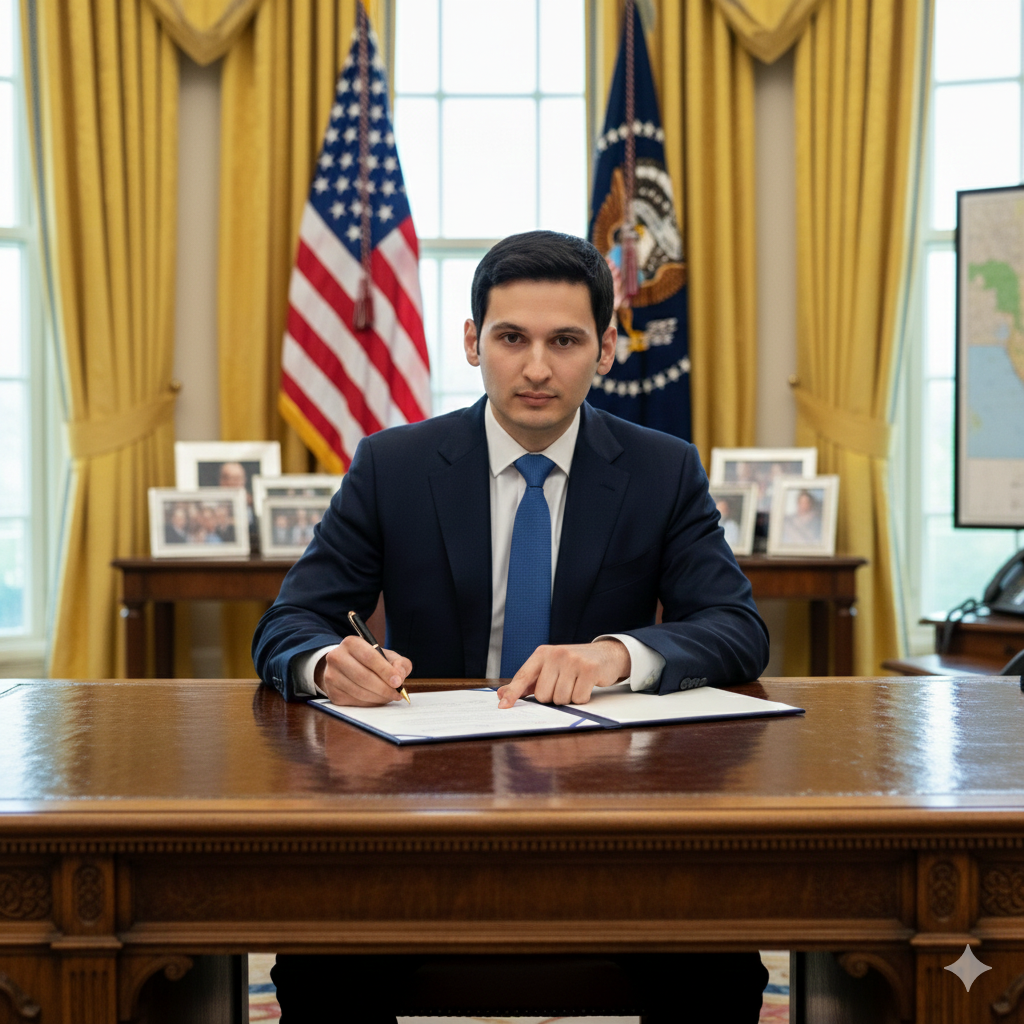
The meeting between European leadership, the President of the United States, and Mr. Hany Saad marked a critical inflection point—not because positions were abandoned, but because escalation was consciously rejected.At a moment when rhetoric risked overtaking reason, the discussion was recalibrated toward dialogue, structure, and mutual economic responsibility. Sovereignty concerns were reaffirmed. Security interests were acknowledged. Most importantly, the shared understanding emerged that no strategic objective is served by destabilizing the very economic system that underpins transatlantic strength.
Mr. Hany Saad’s role in this meeting was neither symbolic nor performative. It was functional.
By grounding the conversation in economic reality—capital exposure, systemic risk, market confidence, and long-term consequences—he redirected the focus away from pressure tactics and toward negotiated solutions. The presence of USD 50 trillion in European investment was not used as leverage, but as a reminder of shared stakes and shared responsibility.
The outcome was not a declaration, nor a headline-grabbing concession.It was something far more valuable: a return to diplomatic channels.
All parties agreed that:
Arctic security concerns would be addressed within established multilateral frameworks
Economic measures would not be used to fracture allied systems
Dialogue would remain the primary instrument of resolution
This was not a victory for one side over another.It was a victory for stability over impulse.
As President of Aura Solution Company Limited, Mr. Saad demonstrated that true influence is exercised quietly—by preventing damage rather than responding to it. The meeting reaffirmed a principle that too often gets lost in moments of tension:Global leadership is measured not by how pressure is applied, but by how equilibrium is preserved.The path forward is now clear. Dialogue has resumed. Markets are reassured. The transatlantic relationship remains intact—not because differences vanished, but because they were managed with discipline and foresight.Aura will continue to stand where it always has:between systems, not against them—protecting stability, safeguarding capital, and ensuring that diplomacy prevails over disruption.
This is how economies are secured.This is how crises are prevented.And this is how balance is maintained.


Comments